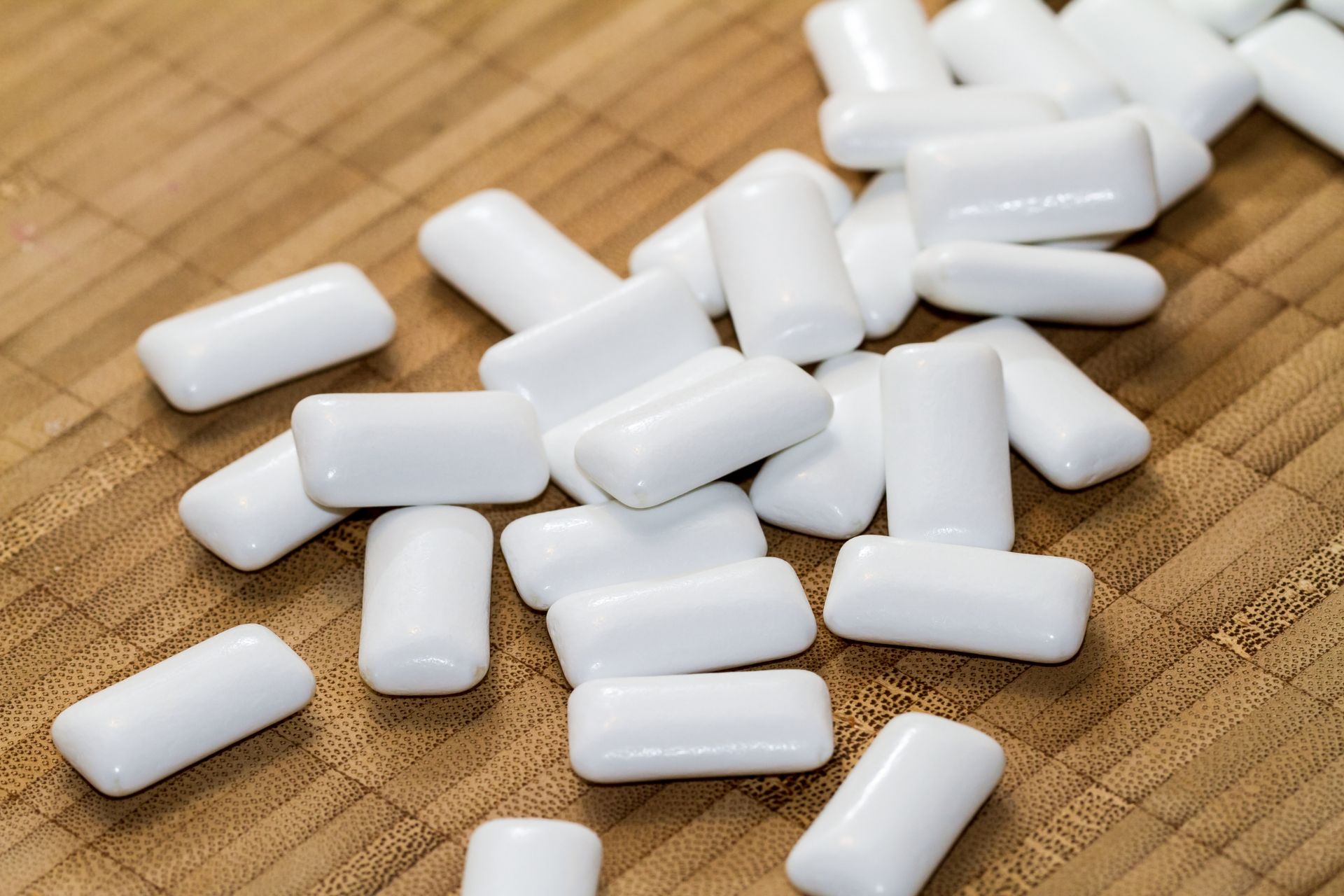
Saliva remineralizes enamel, and chewing sugar-free xylitol gum for 20 minutes after meals raises saliva flow 10 to 12 times.
Xylitol and “remineralizing” describe two separate jobs, and gum labels blur them. At Oxboro Family Dental, we tell patients to read the ingredient list first. Our general guide to sugar-free gum covers the basics, and the sections below sort out which ingredients earn their place.
Does Xylitol Gum Remineralize Teeth?
Xylitol gum helps teeth remineralize only by triggering saliva, which carries the calcium and phosphate that rebuild weakened enamel.
Resting saliva flows at 0.3 to 0.4 mL per minute, and chewing multiplies that rate, according to the American Dental Association. More saliva means more minerals washing over your teeth and more acid cleared away.
Xylitol has a different job. Decay bacteria cannot use xylitol as fuel, so a piece of gum sweetens your mouth without feeding acid production.
Two jobs, two ingredients. A gum can do the first, the second, or both, and the table shows where each ingredient stands.
| Ingredient | What it does | Does the evidence hold up in gum |
|---|---|---|
| Xylitol | Sweetens without feeding decay bacteria | Partly. Sugar-free gum trials found fewer cavities. Proof that xylitol beats other sugar-free sweeteners is low quality. |
| Sorbitol and other sugar-free sweeteners | Sweeten without sugar while chewing triggers saliva | Yes for the saliva effect. Trials had people chew for 20 minutes after meals. |
| CPP-ACP (Recaldent) | Delivers calcium and phosphate to enamel | Yes in short randomized trials using enamel samples worn in the mouth. |
| Nano-hydroxyapatite | Supplies a mineral similar to enamel | Unproven. A 2022 systematic review found no conclusive evidence, and its studies tested toothpaste. |
What Should You Look for in a Xylitol Gum?
A good xylitol gum lists xylitol as the first ingredient, uses no second sweetener, and states the grams of xylitol in each piece.
Sugar-free gum can be sweetened with sorbitol, mannitol, aspartame, or xylitol, and the mix shows up only in the ingredient list. Ingredients appear in order of weight, so a gum with xylitol in fourth place carries little of it.
Recommended: gums whose labels meet all three checks. Read your own pack, since formulas change.
- Epic: 1.06 g of xylitol per 1.5 g piece, with xylitol as the only sweetener
- Spry mint flavors: 0.9 g of xylitol per 1.2 g piece, with xylitol listed first
- PUR: labeled as sweetened with 100% xylitol
Clinical research compares ingredients and chewing habits. Brand-against-brand trials are missing from the reviews cited in this article, so treat any online ranking of gum brands with caution.
Is xylitol gum better than regular sugar-free gum?
Xylitol gum has not been proven better than other sugar-free gum at preventing cavities. A Cochrane review of 10 trials rated the evidence for xylitol products other than fluoride toothpaste as low to very low quality. Sugar-free gum as a group has firmer support, so a sorbitol gum still helps when xylitol gum is unavailable.
Do Remineralizing Gums With Hydroxyapatite Work?
Hydroxyapatite gums have no solid clinical proof yet. A 2022 systematic review in Clinical Oral Investigations found no conclusive evidence that nano-hydroxyapatite prevents or reverses early decay, and the studies it pooled tested toothpaste.
The idea behind these gums is reasonable. Hydroxyapatite closely matches the mineral in enamel, so brands add tiny particles and call the gum remineralizing. A plausible idea still needs a trial, and a piece of gum spends only minutes in your mouth.
One additive does have gum trials behind it. Casein phosphopeptide-amorphous calcium phosphate, sold as Recaldent and shortened to CPP-ACP, remineralized enamel lesions in randomized, double-blind studies published in the Journal of Dental Research. CPP-ACP comes from milk protein, so anyone with a milk allergy should skip it.
A hydroxyapatite gum sweetened with xylitol still triggers saliva, so the chewing helps either way. We treat the added-mineral claim as unproven until gum trials are published.
How Should You Chew Xylitol Gum for Your Teeth?
Chew one piece for about 20 minutes right after a meal or snack.
Timing matters more than brand. Acid builds on teeth after eating, and the trials that found fewer cavities had people chew after meals.
Take someone who eats lunch at a desk in Bloomington and will not see a toothbrush until 9 p.m. A piece of xylitol gum after that lunch brings saliva in while the acid is at its peak. Saliva is the repair crew, and the gum is the phone call that gets the crew on site.
Gum is an addition to daily care. Keep brushing twice a day with fluoride toothpaste and cleaning between your teeth daily. Fluoride does the heavy lifting in that routine, and fluoride mouthwash timing changes how much of it stays on your enamel.
How many pieces of xylitol gum should you chew a day?
One piece after each meal is a sensible starting routine, which means about three pieces a day for someone eating three meals. Published research has not settled on a daily gram target for xylitol, so we do not give one. Follow the serving directions on your pack, and cut back if your stomach objects.
Gum helps between brushings. An exam shows if your enamel has early weak spots that need more than gum.
Who Should Be Careful With Xylitol Gum?
Dog owners, people with jaw pain, people with sensitive digestion, and parents of young children should take extra care with xylitol gum.
Red flags:
- A dog in the home. Xylitol is toxic to dogs, and poisoning signs can start within 20 minutes. Store gum where a dog cannot reach a purse or backpack.
- A sore or clicking jaw. Chewing adds work for a jaw joint that already hurts, so skip the gum and ask us about a custom night guard if clenching is part of the picture.
- Stomach upset. Xylitol gum labels warn that heavy use can have a laxative effect.
- Young children. Gum is a choking risk for a child who cannot yet chew without swallowing.
Heart health deserves a mention too. A 2024 study in the European Heart Journal found that people with the highest blood xylitol levels were about 50% more likely to have a cardiovascular event over three years. The study shows an association, and its intervention arm used a xylitol-sweetened drink. Anyone with heart disease or a history of blood clots can raise the question with a physician.
When is Gum Not Enough?
Gum is not enough once decay has broken through the enamel surface, because saliva can only rebuild early weak spots.
Chalky white patches near the gumline mark the stage where minerals can still go back in. A hole, a dark spot that traps food, or pain with sweets needs a dentist.
Prevention at our Bloomington office includes fluoride treatments and dental sealants for the deep grooves of molars. Sealants and fluoride put protection in places a piece of gum cannot reach.
TL;DR
- Saliva remineralizes enamel, and chewing gum raises saliva flow 10 to 12 times.
- Xylitol sweetens gum without feeding decay bacteria, and xylitol alone does not rebuild enamel.
- A strong pick lists xylitol first, uses no second sweetener, and states grams per piece on the label.
- Hydroxyapatite gums lacked conclusive clinical evidence in a 2022 systematic review.
- Chew for 20 minutes after meals, and keep xylitol gum away from dogs.
Find out which preventive steps fit your teeth, from fluoride treatments to sealants.
We see patients of all ages in Bloomington.
FAQ
Does remineralizing gum work?
Remineralizing gum works mainly through saliva, the same way any sugar-free gum does. Added hydroxyapatite has no conclusive clinical evidence behind it, and the research that exists tested toothpaste. Chewing after meals still helps enamel, so the habit has value even if the added mineral turns out to do little.
Is xylitol gum okay for children?
Xylitol gum suits children who can chew without swallowing the piece. Younger children face a choking risk, so a parent should decide when a child is ready and stay nearby at first. Gum never replaces brushing with fluoride toothpaste, and sealants protect the molar grooves where food and plaque collect.
Can xylitol gum reverse a cavity?
Xylitol gum cannot reverse a cavity that has formed a hole in the tooth. Saliva can return minerals to early weak spots in enamel, which is the stage gum supports. Once the surface breaks, the tooth needs a filling, and waiting lets decay travel deeper toward the nerve.
Is xylitol gum dangerous for dogs?
Xylitol gum is dangerous for dogs. The FDA lists sugar-free gum among the common sources of xylitol poisoning, with signs that include vomiting, weakness, and seizures. Keep packs in a closed cabinet, check coat pockets and bags, and call a veterinarian or animal poison control right away if a dog eats any.
Does xylitol gum help with dry mouth?
Chewing xylitol gum raises saliva flow while the piece is in your mouth, which can ease a dry mouth for a short time. Dryness that lasts has a cause, and medications are a frequent one. Tell us at your next visit, because less saliva leaves teeth with less protection.