
Chewing sugar-free gum for 20 minutes after a meal rinses teeth with saliva and loosens food debris, but it does not replace brushing and flossing.
Patients at our Bloomington office ask us about gum during cleanings. We tell them that a piece after lunch helps, and that plaque still needs a toothbrush tonight.
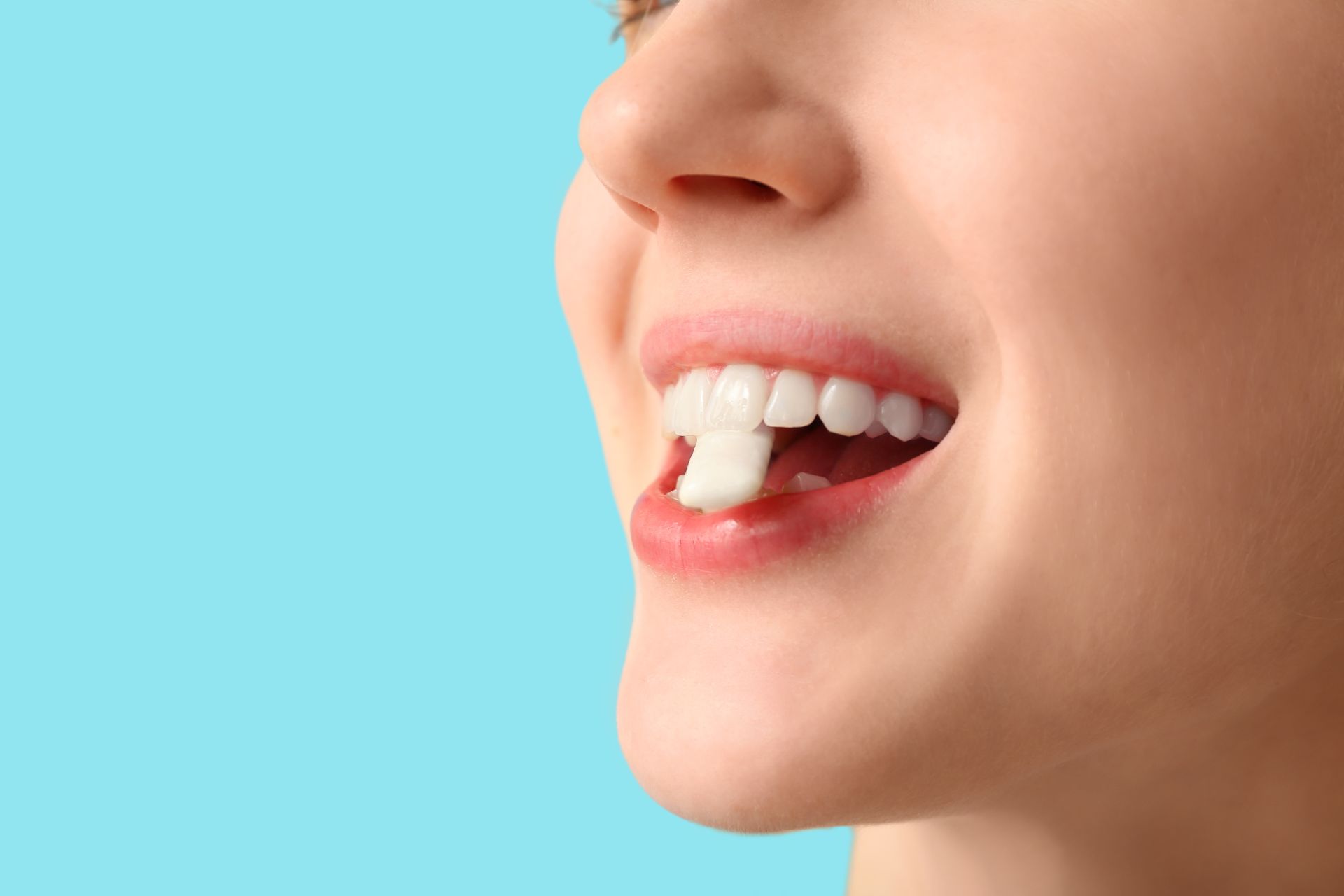
Does Chewing Gum Help Clean Teeth?
Chewing gum helps clean teeth by making your mouth produce more saliva. A resting mouth makes 0.3 to 0.4 mL of saliva a minute, and chewing even unflavored gum base raises that flow 10 to 12 times. The extra saliva washes loose food off your teeth and helps neutralize the acids that plaque bacteria release after you eat.
Rinsing a dinner plate under the tap works the same way. The water carries off crumbs and sauce. A thin film stays on the plate until a sponge scrubs it, and plaque behaves like that film.
| What people say gum does | Does it work | What the evidence shows |
|---|---|---|
| Rinses away food debris | Yes | 14.18% less debris between teeth after 3 weeks |
| Removes plaque | Mixed | Unchanged in one study, reduced across 8 studies in a 2022 review |
| Removes tartar | None found | Gum left established plaque in place, and tartar is plaque that has hardened |
| Lowers cavity risk | Yes, sugar-free only | Fewer cavities in trials of 20 minutes after meals |
| Replaces brushing and flossing | It does not | The American Dental Association says gum is not a substitute |
| Works the same with sugared gum | It does not | Plaque bacteria turn sugar into decay-causing acid |
Is chewing gum good for cleaning teeth?
Chewing gum is good for rinsing teeth and limited at cleaning them. Sugar-free gum boosts saliva, which clears loose food and dilutes acid after a meal. Plaque is a sticky film that clings to enamel, and removing it takes the bristles of a toothbrush and floss between the teeth.
Does Gum Remove Plaque or Tartar?
Gum clears loose debris, shows mixed results on plaque, and has no evidence behind it for tartar.
The clearest test comes from a 2010 study in Dental Research Journal. Twenty-four dental students kept brushing twice a day and added one piece of sugar-free gum for 30 minutes after lunch and dinner. After 3 weeks, debris between their teeth had dropped by 14.18%, while plaque on the tooth surfaces showed no significant change.
Other research points the opposite way on plaque. A 2022 review from King’s College London pooled 8 studies and found that sugar-free gum reduced plaque quantity, with results that varied widely from one study to the next. A grant from Mars Wrigley funded the review, so we read the finding as encouraging and unsettled.
Tartar is a separate problem. Plaque that stays on the teeth hardens into tartar, also called calculus, and we have found no study showing that gum removes it. Our hygienists take tartar off with ultrasonic instruments and hand scalers, and deposits below the gumline call for scaling and root planing.
Can chewing gum help remove tartar?
Chewing gum has no evidence showing it removes tartar. Tartar forms when plaque stays on the teeth long enough to harden, and in the 2010 study gum did not shift even the soft plaque already on tooth surfaces. Daily brushing and cleaning between the teeth keep plaque from hardening in the first place.
Does gum remove 100 million bacteria?
One piece of chewed gum held about 100 million bacteria in a 2015 PLOS ONE study. Wrigley funded the trial, which involved five volunteers, and trapping peaked early and declined over 10 minutes of chewing. The authors estimated that figure at around 10% of the bacteria in saliva, so the headline sounds bigger than it is.
Our hygienists remove tartar during a professional cleaning.
Is Sugar-Free Gum Good for Your Teeth?
Sugar-free gum is good for your teeth when you chew it after meals and keep brushing. The American Dental Association reports that clinical trials found fewer cavities in people who chewed sugar-free gum for 20 minutes after eating. Sugared gum works against you, because plaque bacteria use the sugar to produce the acids that cause decay.
Only sugar-free gums carry the ADA Seal of Acceptance, and our guide to choosing sugar-free gum with the ADA Seal goes through the options.
Cavity prevention for children goes further than gum. Dental sealants for kids cover the chewing surfaces of the molars and premolars.
Do dentists recommend gum?
Dentists recommend sugar-free gum as an add-on to brushing and flossing. The American Dental Association states that chewing sugar-free gum may contribute to reducing cavity risk when added to twice-daily brushing with fluoride toothpaste and daily cleaning between teeth. We give our Bloomington patients the same advice, as long as the pack says sugar-free.
How Long Should You Chew Gum After Eating?
Chew sugar-free gum for about 20 minutes after eating, which is the length used in the clinical trials the ADA cites. The 2015 PLOS ONE study found gum trapped the most bacteria early in chewing, with the count falling over 10 minutes.
Take a parent who eats a sandwich in the car between a Saturday morning game and an afternoon of errands. A toothbrush is hours away, and bread is packed between the back teeth. A piece of sugar-free gum covers that gap until the evening brush.
Your evening routine stays the same. Brush for two minutes with fluoride toothpaste, clean between your teeth, and check our notes on when to use mouthwash if you rinse as well. Gum loosened debris between teeth in the 2010 study, and the ADA still calls for cleaning those gaps every day, so our post on how often to floss is the next read.
Who Should Skip Chewing Gum?
People with a TMJ disorder should skip chewing gum, according to the ADA’s patient guidance. Regular, extended chewing is linked to jaw pain and headaches, and chewing gum with a TMJ disorder can make the condition worse.
Jaw clicking, locking, or soreness while chewing is a reason to stop and get checked. Bring it up at your next visit for dental cleanings and exams, since TMJ treatment is one of the services we offer.
Is it good to chew gum every day?
Chewing sugar-free gum every day after meals matches the pattern used in the clinical trials that found fewer cavities. The ADA treats daily gum as an addition to brushing twice a day and cleaning between teeth. Jaw pain, clicking, or headaches are signs to cut back and mention it to your dentist.
TL;DR
- Chewing gum raises saliva flow 10 to 12 times over a resting mouth.
- Sugar-free gum cut debris between teeth by 14.18% over 3 weeks in a 2010 study.
- Evidence on plaque is mixed, and no study we found shows gum removing tartar.
- Clinical trials found fewer cavities with 20 minutes of sugar-free gum after meals.
- The ADA says gum is not a substitute for brushing twice a day and cleaning between teeth daily.
Find out how well your daily routine is keeping plaque in check.
Get Your Teeth Checked in Bloomington
We accept most major dental insurance plans.
FAQ
Can chewing gum replace brushing your teeth?
Chewing gum cannot replace brushing. The American Dental Association states that sugar-free gum is not a substitute for brushing twice a day with fluoride toothpaste and cleaning between teeth daily. Gum rinses the mouth with saliva and loosens food, while a toothbrush and floss do the work of removing plaque from tooth surfaces.
Is gum bad for your teeth?
Gum with sugar is bad for your teeth, and sugar-free gum is the opposite. Plaque bacteria use sugar to make the acids that cause decay, so sugared gum feeds the problem while you chew. Sugar-free gum uses xylitol, sorbitol, aspartame, or mannitol, which the ADA classes as non-cavity-causing sweeteners.
Do dentists recommend xylitol gum?
Xylitol is one of the sweeteners used in gums that carry the ADA Seal of Acceptance. A 2021 review cited by the American Dental Association found that sugar-free gum sweetened with xylitol reduced levels of Streptococcus mutans, a bacterium linked to cavities. Any sugar-free gum with the ADA Seal of Acceptance has met the association’s requirements for safety and efficacy.
Does chewing gum clean between your teeth?
Chewing gum clears some loose food from between teeth. In a 2010 study, three weeks of sugar-free gum after meals lowered debris in those gaps by 14.18%. Plaque on the tooth surfaces stayed the same, and the American Dental Association still advises cleaning between your teeth every day.