

Deep Cleaning Bloomington, MN
Are you looking for Deep Cleaning Bloomington, MN? At Oxboro Family Dental we provide high quality dental care for our patients in Bloomington, MN and surrounding areas!
Request an Appointment
Are you looking for Deep Cleaning Bloomington, MN? At Oxboro Family Dental we provide high quality dental care for our patients in Bloomington, MN and surrounding areas!
Request an AppointmentA trip to the dentist is generally a simple process. During a routine visit, your dentist cleans your teeth with medical-grade equipment and checks your gums for signs of decay. However, a standard cleaning only reaches the surface of the tooth. When bacteria move below the gumline, a “routine” cleaning isn’t always enough to protect your oral health.
If you haven’t been to the dentist in a long time or are experiencing symptoms of gum disease, our team at Oxboro Family Dental may recommend a Deep Teeth Cleaning.
Known clinically as Scaling and Root Planing (SRP), this procedure is the gold standard for treating gum disease and preventing tooth loss. We are committed to helping our Bloomington community maintain healthy, lifelong smiles by providing high-quality periodontal care in a comfortable environment.
Below, we’ll explain exactly what happens during a deep cleaning, why it is essential for restoring your oral health, and how you can prevent the need for it in the future.
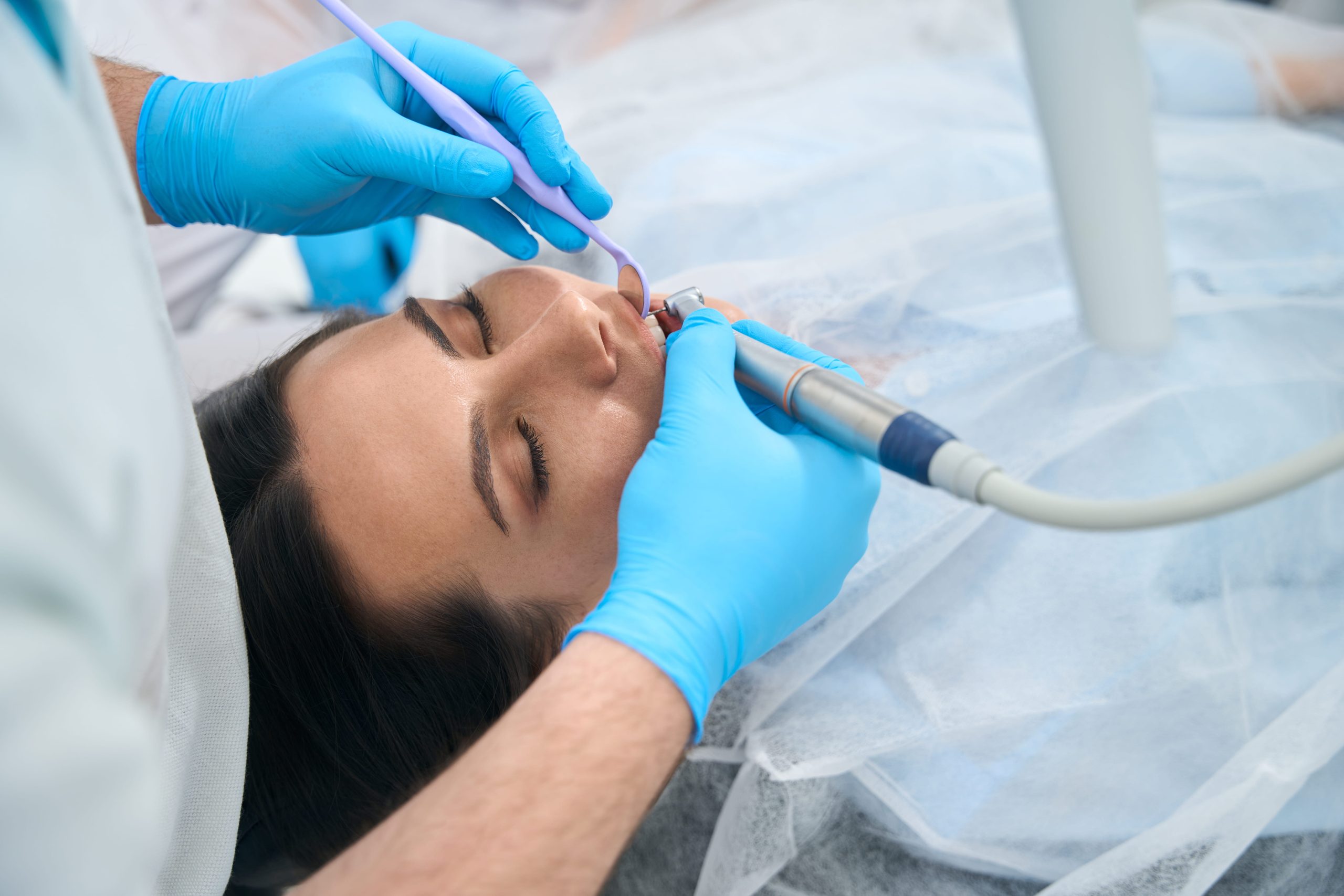
While a routine cleaning focuses on the visible parts of your teeth, a deep teeth cleaning is a specialized procedure designed to treat the areas you cannot see. The clinical goal of this treatment is to remove subgingival deposits—plaque and hardened tartar (calculus) that have trapped bacteria deep within the pockets between your teeth and gums.
By removing these deposits and smoothing the tooth roots, we eliminate the source of infection, allowing your gum tissue to heal and reattach firmly to the teeth.
Not every cleaning is the same. Depending on the health of your gums, the team at Oxboro Family Dental will recommend one of the following:
Gross Debridement: A “heavy-duty” cleaning used when there is an exceptional amount of tartar buildup that prevents a dentist from performing a proper exam.

| Feature | Routine Cleaning (Prophylaxis) | Deep Cleaning (Scaling & Planing) |
|---|---|---|
| Primary Goal | Prevention | Treatment of Gum Disease |
| Cleaning Depth | Above & slightly below gumline | Deep into periodontal pockets |
| Anesthesia | Not usually required | Often used for patient comfort |
| Common Frequency | Every 6 months | As needed (often followed by maintenance) |
| Tools Used | Standard scalers & polishers | Ultrasonic tools & specialized hand instruments |
A deep cleaning is not just a routine maintenance step; it is a clinical intervention designed to stop gum disease in its tracks. Below is the breakdown of why this procedure becomes necessary.
If you notice the following signs, it is important to schedule an appointment with your dentist as soon as possible. These are common indicators that bacteria have begun to infect your gum tissue:
If caught early, these symptoms represent Gingivitis. However, if left untreated, they can lead to Periodontitis, which results in bone loss, severe decay, and eventually, tooth loss.
Did you know that, at any given time, your mouth is home to as many as 100 to 200 different species of bacteria?
With good oral hygiene, you may have 1,000 to 10,000 bacteria living on a single tooth. However, without proper care, that number can skyrocket to 100 million or even 1 billion. This bacteria forms a colorless, sticky film called plaque.
When you eat or drink, this plaque produces acids that break down enamel and irritate the gumline. If plaque is not removed, it mineralizes into tartar (also known as calculus). Tartar is a hardened deposit that cannot be removed by a toothbrush; it requires professional dental tools to scrape away before it causes permanent damage to your jawbone.
The most objective way we determine if you need a deep cleaning is by measuring your periodontal pockets. During your exam at Oxboro Family Dental, we use a small probe to measure the space between your tooth and the surrounding gum tissue:
When pockets reach 4mm or more, they become impossible to clean with regular brushing. These deep pockets trap bacteria and tartar against the root of your tooth, making a Scaling and Root Planing procedure the only way to effectively clean the area and allow the gums to reattach.
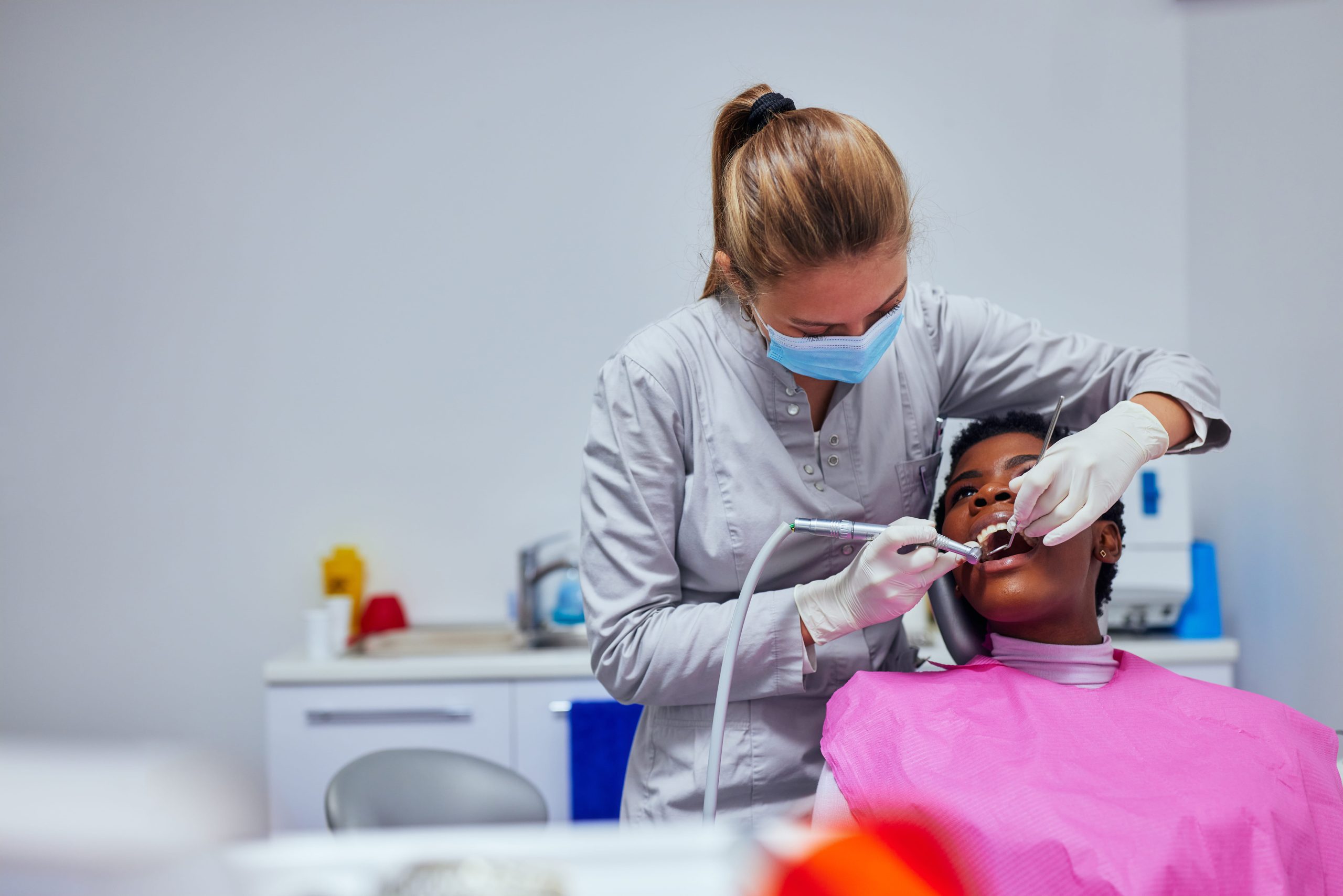
At Oxboro Family Dental, a deep cleaning is a thorough process designed to restore your health by removing tartar and plaque from the surface of the teeth and deep below the gumline. Because we are cleaning the tooth all the way to the root, the procedure is more detailed than a standard visit and may take multiple visits to complete (typically treating one-half of the mouth per session).
Here is exactly what you can expect during the procedure:
Before the cleaning begins, we perform a clinical assessment to determine the extent of the infection. This includes:
We want your experience to be as pain-free as possible. To reduce or eliminate any discomfort during the deep cleaning, your dentist or hygienist will apply a local anesthetic to numb the gums and the roots of the teeth in the area being treated.
During the scaling phase, we remove the hardened plaque and tartar from above and below the gumline. We typically use a combination of:
Root planing is the “polishing” of the root surfaces. We carefully smooth out the rough spots on the tooth roots. This serves two vital purposes:
Once the scaling and root planing are complete, we may perform a final rinse with an antimicrobial agent (such as Chlorhexidine) to flush out any remaining bacteria. In some cases, a localized antibiotic gel may be placed directly into the gum pockets to support the healing process over the following week.
Proper aftercare is essential to ensure your gums heal quickly and reattach to the tooth roots. While most patients at Oxboro Family Dental return to their normal routine the next day, your gums will be in a sensitive state of “active healing” for about a week.
For the first 2–3 days, stick to a soft food diet to avoid irritating the healing gum tissue.
It is vital to keep your mouth clean, but you must be gentle:
While minor bleeding (a pinkish tinge in your saliva) and mild swelling are normal for a day or two, please contact our Bloomington office if you experience:
With proper at-home oral healthcare and regular trips to the dentist, you should be able to avoid a deep cleaning entirely. Prevention is the best way to save your smile and avoid the more costly procedures required when gum disease is allowed to progress.
If left untreated, gum disease can lead to permanent damage, including severe bone loss and the loss of multiple teeth. Here is how you can keep your gums healthy and avoid periodontitis.
One of the best things you can do to cut back on plaque and reduce the chances of cavities is to simply take proper care of your oral health every day.
Regular trips to the dentist allow us to remove plaque before it mineralizes into tartar and causes real damage. During your semi-annual visit at Oxboro Family Dental, we will:
We understand that you may have concerns before your appointment. Here are the most common questions our Bloomington patients ask about the scaling and root planing procedure.
Most patients find the procedure quite manageable. Because we are cleaning deep below the gumline, we typically use a local anesthetic to numb the area being treated. This ensures you won’t feel pain during the process. Afterward, you may experience some mild gum tenderness or tooth sensitivity to cold temperatures, but this usually subsides within a few days.
While a routine cleaning is done in a single hour, a deep cleaning is much more thorough. To ensure patient comfort and clinical precision, the process is often broken into one or two visits.
Usually, we treat one side of the mouth (two quadrants) per appointment. This allows you to chew comfortably on the non-numb side of your mouth after each session. If your gum disease is localized to just a few teeth, we may be able to complete the treatment in a single visit.
Yes, most patients can return to work or their normal daily activities immediately. However, keep in mind that your mouth will be numb for 2 to 4 hours following the appointment. You may find it difficult to speak clearly or drink without spilling during this time, so you might want to avoid important meetings or presentations immediately following your visit.
Yes. A regular cleaning (prophylaxis) is a preventative treatment that focuses on the crown of the tooth above the gumline. A deep cleaning is a medical treatment for active gum disease. It reaches all the way to the root of the tooth to remove the source of the infection and promote gum healing.
The cost of scaling and root planing varies depending on the severity of the gum disease and how many quadrants of the mouth require treatment. Because this is a periodontal treatment, many dental insurance plans cover a significant portion of the cost. Our team at Oxboro Family Dental can provide a detailed estimate and check your insurance benefits before we begin.

If you are showing symptoms of gum disease, such as persistent bad breath, tender gums, or bleeding when you floss, don’t wait for the problem to get worse. Listen to your body and take care of the issue early.
Whether you need a routine checkup or are looking for high-quality deep cleaning in Bloomington, MN, our team is here to help. Reach out to Oxboro Family Dental today to schedule an examination. We will examine your teeth, gums, and jawbone to create a personalized plan to restore your oral health and keep your smile bright for years to come.