
Veneers are considered a permanent dental treatment because getting them requires removing a thin layer of enamel that never grows back. The veneers themselves aren’t a lifetime fix, though. Porcelain veneers typically last 10 to 15 years before they need replacing, while composite veneers usually last 5 to 7 years.
That distinction trips up almost every patient who sits in our chairs asking about veneers. So let’s walk through what “permanent” really means here, because it’s not a marketing word. It’s a decision about your actual teeth.
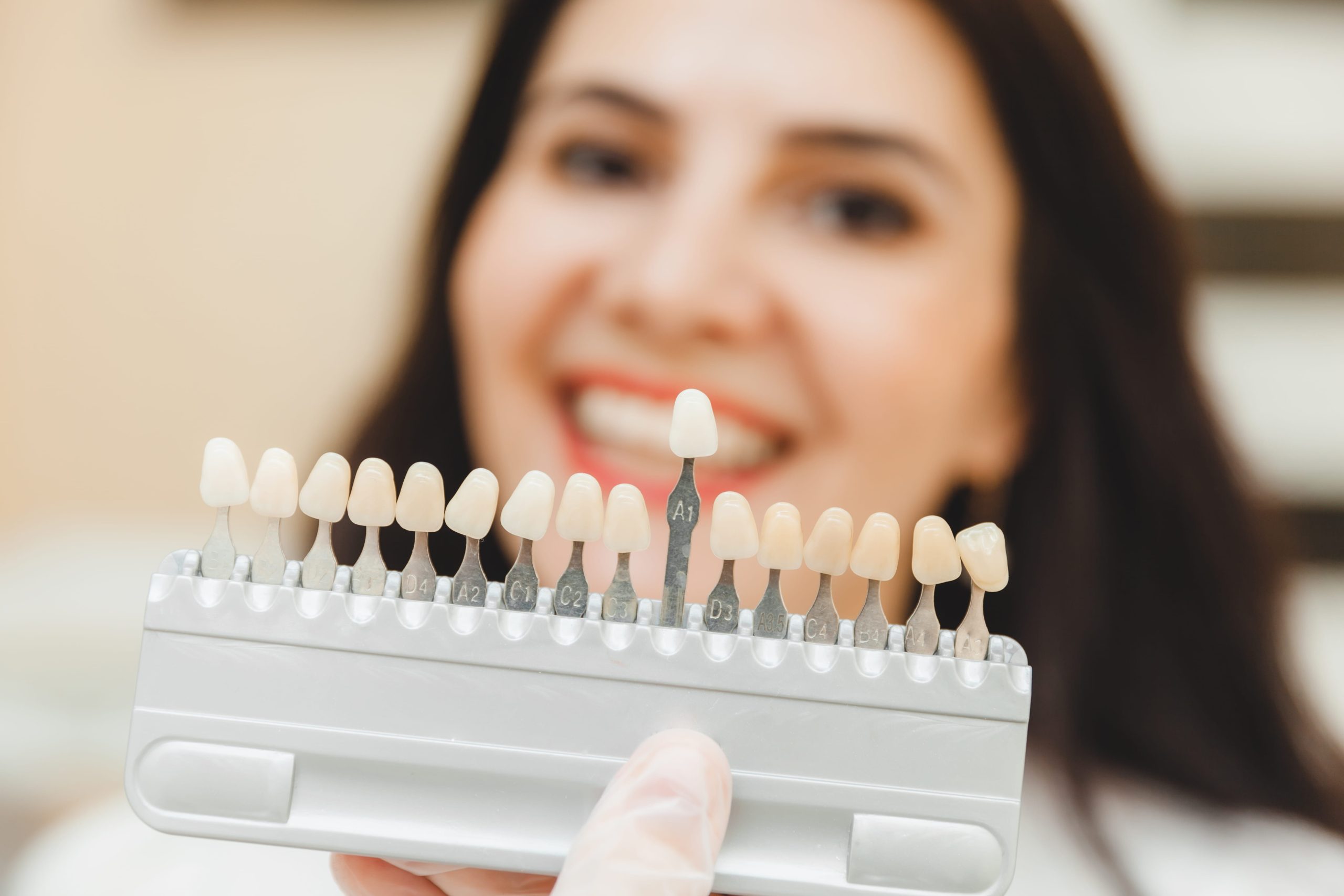
Are Veneers Actually Permanent, or Just Really Long-Lasting?
Both, in a way. It depends on what part of the question you’re asking.
The procedure is permanent. Once your dentist removes enamel to make room for a veneer, that enamel is gone for good. The veneer itself is not permanent. It’s a restoration, and restorations wear out.
We tell every patient this before we touch a single tooth. It’s the fair thing to do. The ADA confirms this procedure isn’t reversible because enamel removal is part of standard veneer placement, not an optional step some dentists skip.
Here’s the way we explain it in the office: think of your enamel like the factory paint on a car. Once it’s sanded down for a new finish, you can’t put the factory paint back. You can absolutely repaint the car again later. You just can’t undo the first sanding.
What Actually Happens to Your Enamel When You Get Veneers?
Your dentist removes a small, precise layer of enamel from the front of the tooth, usually about half a millimeter, to make room for the veneer shell.
That amount sounds small, and it is. But enamel doesn’t regenerate the way skin or bone does. Once it’s off, the tooth needs a permanent covering (a veneer, a crown, or bonding) from that point forward.
This is also why your tooth may feel more sensitive to hot or cold for a few days after the prep appointment. That sensitivity is normal and usually fades once the final veneer is bonded in place.
If you want the full walkthrough of the veneer placement process at our Bloomington office, including the impression, the temporary veneer, and the fitting appointment, we’ve laid out every step there.
How Long Do Veneers Actually Last?
Porcelain veneers typically last 10 to 15 years. Composite veneers typically last 5 to 7 years. That gap comes down to the material, not the skill of the dentist alone.
Here’s the side-by-side:
| Material | Typical Lifespan | Enamel Removed | Repair If Damaged |
|---|---|---|---|
| Porcelain veneer | 10 to 15 years | Yes, thin layer | Usually needs full replacement |
| Composite veneer | 5 to 7 years | Minimal to none | Easier to patch or touch up |
The numbers hold up in the research, too. In a peer-reviewed review of veneer outcomes, porcelain laminate veneers showed roughly a 95% survival rate at the ten-year mark. That means the vast majority of well-placed, well-cared-for veneers are still doing their job a decade later.
If the enamel removal gives you pause, it’s worth knowing there are less invasive routes for smaller fixes. Curious how bonding stacks up on durability and cost? We break down bonding, veneers, and crowns side by side on that page.
Is a Veneer the Right Kind of “Permanent” for Your Tooth?
Not every cosmetic problem needs a permanent fix. That’s the honest answer, and it’s one we give patients even when it means recommending something less expensive than veneers.
Veneers make the most sense for:
- Discoloration that whitening can’t touch (internal staining, old fillings, tetracycline stains)
- Chips or cracks that affect more than one tooth
- Gaps you want closed without orthodontics
- Teeth that are uneven, worn down, or oddly shaped
If your main concern is surface staining from coffee, tea, or wine, professional whitening might handle it first, no enamel removal required. And if the damage is severe enough that a veneer wouldn’t hold, a crown might be the better call since it replaces the entire visible tooth structure instead of just the front surface.
The point isn’t to talk you out of veneers. It’s to make sure you’re choosing them for the right reason.
What Makes Veneers Last Longer, or Fail Sooner?
Your habits matter more than the brand of porcelain your dentist uses.
What extends the life of your veneers:
- Brushing and flossing twice a day, every day
- Wearing a nightguard if you grind your teeth
- Keeping your six-month cleanings and checkups
What shortens it:
- Biting ice, pens, or fingernails
- Using your teeth to open packaging
- Skipping regular dental visits after placement
Veneers are strong, but they’re not indestructible. A cracked or chipped veneer usually can’t be repaired the way a natural tooth can. It needs to be replaced.
Not sure whether your teeth are even good candidates for something this permanent? A quick evaluation can tell you more than any article can.
No pressure, just an honest look at what your smile actually needs.
How Much Do Veneers Cost, and Does the Price Match the Commitment?
Veneers usually run higher than bonding and lower than a full set of crowns, with the exact number depending on material, how many teeth you’re treating, and the complexity of your case.
Cost is often the real hesitation, more than the enamel removal. That’s a fair thing to weigh. A permanent decision on your teeth deserves a real look at the numbers, not just the “yes” from the mirror.
If cost is the sticking point, it’s worth asking about financing options like CareCredit and Cherry, which can spread the cost out instead of requiring it all upfront.
Who Should Place Something This Permanent?
This is a bigger deal than most people realize until they’ve already committed. The tooth structure your dentist removes doesn’t come back, so the person doing the prep work matters.
We’d be doing you a disservice if we didn’t say this plainly: veneers are a restorative dental procedure, not a beauty treatment. At Oxboro Family Dental, our board-certified prosthodontist, Dr. Saldarriaga, specializes specifically in restoring and replacing tooth structure, which is exactly the training this kind of permanent work calls for.
If you’re weighing veneers against other cosmetic options, take a look at our full range of cosmetic dentistry options before you decide. Sometimes the right fix is smaller than you think. Sometimes it’s veneers. Either way, that call should come from an evaluation, not a guess.
TL;DR: Are Veneers Permanent?
- The procedure is permanent because enamel removal can’t be undone.
- The veneers themselves are not permanent. Porcelain lasts 10 to 15 years, composite lasts 5 to 7 years.
- About 95% of porcelain veneers are still functioning well at the ten-year mark, according to peer-reviewed research.
- Veneers aren’t the only fix. Whitening, bonding, and crowns each solve different problems.
- How you care for your veneers, and who places them, affects how long they actually last.
If you’re ready to find out whether veneers are the right call for your smile, our team can walk you through it in person, with no guesswork.
Schedule Your Veneer Consultation
Free initial evaluation, no obligation.
Frequently Asked Questions
Can veneers be removed once they’re placed?
Not in the way most people imagine. Because a layer of enamel is removed to fit the veneer, your tooth will always need some form of covering (a veneer, crown, or bonding) after that. You can replace a veneer with a new one, but you can’t return the tooth to its original, untouched state.
Do veneers damage your natural teeth?
Placing veneers doesn’t damage healthy teeth when it’s done correctly by a licensed dentist. The enamel removal is a planned, controlled part of the process, not a side effect. The main risk comes from unlicensed providers skipping proper evaluation and technique.
What’s the real difference between porcelain and composite veneers?
Porcelain veneers require enamel removal, last 10 to 15 years, and resist stains well. Composite veneers require little to no enamel removal, last 5 to 7 years, and are easier to repair if chipped. Composite is the more reversible option of the two.
Will insurance cover veneers?
Usually not, since veneers are considered a cosmetic procedure. Insurance may help if a veneer is deemed medically necessary, such as repairing damage from an injury. Our team can check your specific benefits before you commit to treatment.
How do I know if I’m a good candidate for veneers?
Good candidates generally have healthy teeth and gums, with cosmetic concerns like discoloration, chips, gaps, or uneven shape. Patients with active decay, gum disease, or severe grinding habits may need those issues addressed first. An in-person evaluation is the only reliable way to know for sure.